

Elon Musk has announced that SpaceX will send its Starship rocket to Mars by the end of next year, despite recent test failures. Speaking on his social media platform, X, Musk suggested that human landings on the Red Planet could begin as early as 2029, though he acknowledged that 2031 was a more realistic target.
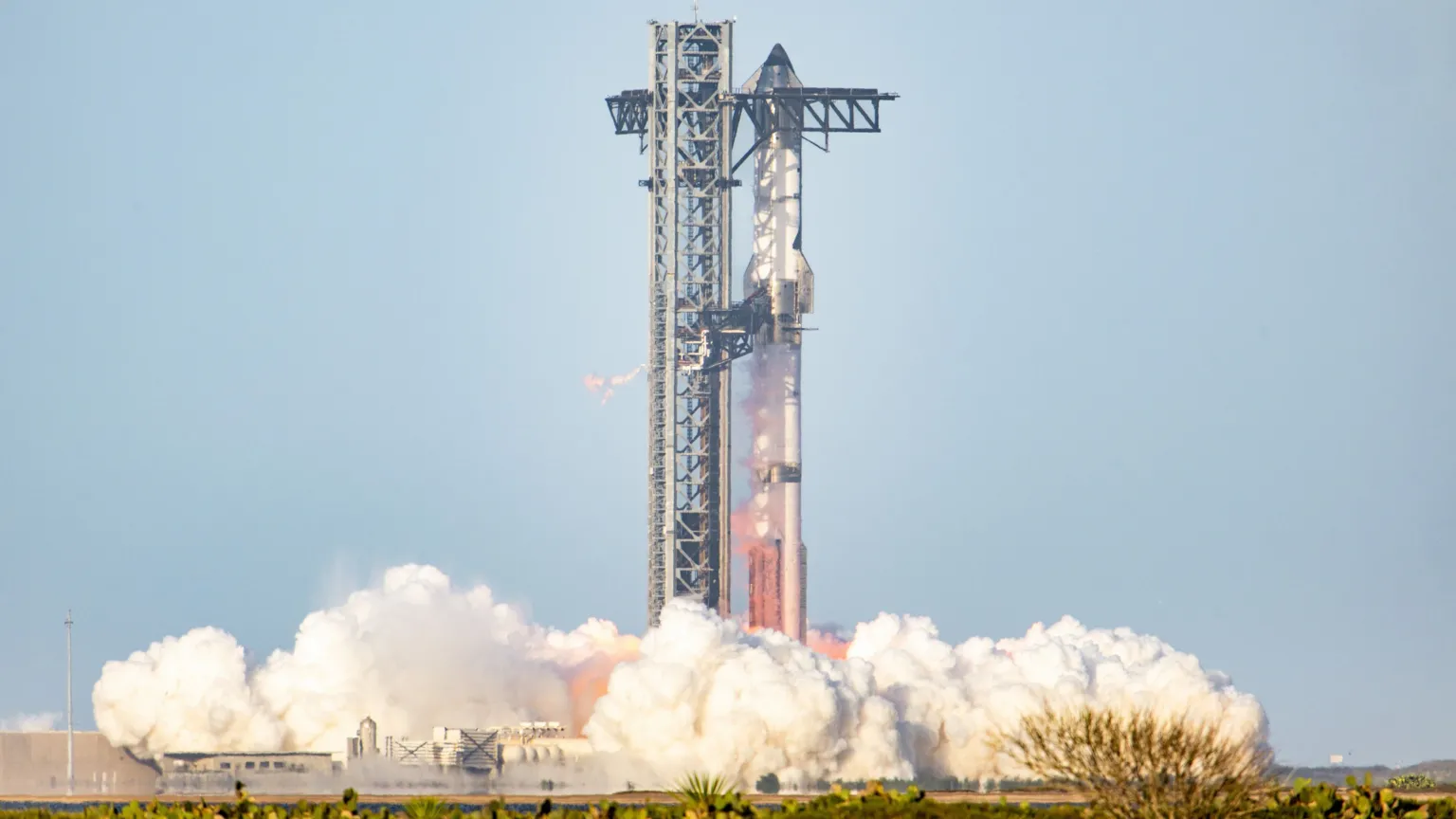
Starship, standing at 123 meters, is the largest rocket ever built and central to Musk’s vision of making humanity a “multi-planetary species.” However, the spacecraft has faced multiple setbacks. In its latest test last week, a Starship prototype exploded minutes after launch from Texas—the second such failure this year, following a similar event in January.
SpaceX has pledged to analyze flight data to determine the cause of the explosion. The Federal Aviation Administration (FAA) has also mandated a full investigation before Starship can fly again. Despite these challenges, Musk remains confident in his ambitious timeline.
NASA is closely monitoring Starship’s progress, as the space agency intends to use a modified version of the rocket as a lunar lander for its Artemis program, which aims to return humans to the Moon. The recent explosion caused debris to fall over the Bahamas, further highlighting the risks associated with Starship’s development.
Musk’s plans for Mars have been years in the making. In 2016, he proposed sending a spacecraft to the planet by 2018. In 2020, he predicted SpaceX would land humans on Mars by 2026. While those timelines have repeatedly shifted, Musk insists that the first mission is now imminent.
The upcoming Mars flight will reportedly carry SpaceX’s humanoid robot, Optimus, which was unveiled last year. Musk envisions the robot assisting in tasks on Mars and eventually being sold for between $20,000 and $30,000.
Meanwhile, SpaceX continues to support NASA’s operations. Last week, the company launched a Falcon 9 rocket carrying astronauts to the International Space Station. However, two astronauts—Butch Wilmore and Suni Williams—remain stuck on the ISS due to technical issues with Boeing’s spacecraft, which was originally meant to bring them home months ago.
Despite setbacks, Musk’s vision for Mars remains undeterred, with SpaceX pushing ahead on what could be humanity’s most ambitious space mission yet.